
Introduction
Buying a used car can be a smart and economical decision, but it comes with its own set of challenges. One of the most critical steps in this process is thoroughly inspecting the vehicle before making a purchase. A detailed inspection can help you avoid costly repairs and ensure you get a reliable car. This ultimate guide to inspecting a used car before you buy it will walk you through every aspect of the inspection process, ensuring you make an informed and confident decision.
Preparing for the Inspection
Researching the Car Model
Before you even set foot in a dealership or meet a private seller, it’s important to research the specific car model you’re interested in. Knowing common issues associated with certain models can help you identify potential red flags during the inspection.
Resources for Research:
- Consumer Reports: Provides detailed reviews and reliability ratings for various car models.
- Edmunds: Offers expert and consumer reviews, along with pricing information.
- Kelley Blue Book: Known for its comprehensive car valuations and reviews.
Common Issues to Look For:
- Transmission Problems: Some models are known for transmission failures at specific mileages.
- Engine Troubles: Certain cars have a history of engine problems, such as oil leaks or overheating.
- Electrical Issues: Research if the car has a record of electrical system failures.
Example: The 2010 Honda Accord is known for its reliable performance, but models from 2008 to 2010 have reported issues with excessive oil consumption.
Essential Tools for Inspection
Having the right tools can make the inspection process more thorough and efficient. While a basic visual inspection can be done with just your eyes and hands, some tools can help you dig deeper into the car’s condition.
List of Tools:
- Flashlight: To inspect hard-to-see areas like under the car and inside the engine bay.
- Tire Pressure Gauge: To check the tire pressure and assess tire health.
- OBD-II Scanner: To read any error codes from the car’s computer system.
- Magnet: To detect hidden body filler from previous repairs.
- Inspection Checklist: A comprehensive checklist to ensure you don’t miss any critical areas.
Why These Tools Are Important:
- Flashlight: Helps you see details in low-light areas.
- Tire Pressure Gauge: Ensures tires are in good condition, which affects safety and performance.
- OBD-II Scanner: Can reveal underlying issues that may not be visible during a visual inspection.
- Magnet: Helps detect areas that might have been repaired with filler instead of proper metalwork.
- Checklist: Keeps you organized and ensures a thorough inspection.
Tip: Create your own checklist or download one from reputable sources online to cover all the essential areas during the inspection.
Exterior Inspection

Checking the Bodywork
The exterior condition of a car can tell you a lot about how well it has been maintained. Start by walking around the car and looking at it from different angles in good lighting.
Steps for Checking the Bodywork:
- Look for Rust: Pay close attention to the wheel wells, door sills, and the undercarriage. Rust can indicate underlying problems and can be costly to repair.
- Inspect for Dents and Scratches: Minor scratches are usually not a big issue, but larger dents can indicate past accidents.
- Check for Mismatched Paint: Mismatched paint can be a sign that parts of the car have been repaired after an accident. Look for inconsistencies in color and texture.
- Examine the Frame: Check for signs of damage or welding, which can indicate that the car has been in a serious accident.
Red Flags:
- Extensive Rust: Significant rust, especially on structural parts, can compromise the car’s integrity.
- Uneven Gaps: Uneven gaps between body panels can indicate poor repair work after an accident.
- Paint Bubbles: Bubbles in the paint can be a sign of rust developing underneath.
Example: If you find rust under the car’s doors or around the wheel arches, it could be a sign of significant corrosion, which can spread and cause major issues.
Inspecting the Tires
Tires are a crucial part of the car’s safety and performance. Inspecting the tires can also give you clues about the car’s alignment and suspension health.
How to Inspect the Tires:
- Check Tread Depth: Use a tire tread depth gauge or a penny. Insert the penny into the tread with Lincoln’s head upside down. If you can see the top of Lincoln’s head, the tread is too low.
- Look for Even Wear: Uneven tire wear can indicate alignment issues, suspension problems, or improper tire inflation.
- Inspect for Cracks and Bulges: Cracks, bulges, or cuts in the sidewall can weaken the tire and make it unsafe.
- Verify Tire Age: Check the DOT code on the tire’s sidewall. The last four digits indicate the week and year the tire was manufactured. Tires older than six years should be replaced, even if the tread is still good.
Tire Wear Patterns:
- Center Wear: Overinflated tires.
- Edge Wear: Underinflated tires.
- Cupping or Scalloping: Suspension issues.
Table: Common Tire Wear Patterns and Causes
| Wear Pattern | Cause |
|---|---|
| Center Wear | Overinflation |
| Edge Wear | Underinflation |
| Uneven Wear | Misalignment or Suspension Issues |
| Cupping or Scalloping | Worn Suspension Components |
Example: If the tires show uneven wear, it could indicate that the car needs a wheel alignment, which can be a sign of underlying suspension issues.
Examining the Lights and Glass
Properly functioning lights and undamaged glass are essential for safety. Ensure all lights work correctly and check the condition of the windshield and windows.
Steps for Inspecting Lights and Glass:
- Test All Exterior Lights: Turn on the headlights, high beams, brake lights, turn signals, and hazard lights. Ensure all bulbs are working.
- Check for Cracks and Chips: Inspect the windshield, windows, and mirrors for any cracks or chips. Even small chips can grow into larger cracks over time.
- Look for Fogging or Moisture: Moisture inside the light housings can indicate leaks, which might affect their functionality.
Red Flags:
- Non-Functional Lights: Burnt-out bulbs or non-working lights can be a sign of electrical issues.
- Windshield Cracks: Cracks in the windshield can spread and may require expensive replacements.
- Moisture in Lights: Moisture can lead to corrosion and electrical problems.
Example: If the car’s headlights have moisture inside, it might indicate that the seals are broken, which can lead to electrical issues down the line.
Interior Inspection

Assessing the Seats and Upholstery
The condition of the car’s interior can provide insight into how well the previous owner maintained the vehicle. Pay close attention to the seats, upholstery, and overall cleanliness.
Steps for Assessing Seats and Upholstery:
- Check for Tears and Stains: Look for any rips, tears, or stains in the seats and carpeting. Excessive wear could indicate neglect or heavy use.
- Test Seat Adjustments: Ensure all seat adjustments work smoothly, including reclining, forward and backward movements, and lumbar support adjustments.
- Inspect Seatbelts: Check that all seatbelts are intact and function properly. Frayed or non-functioning seatbelts are a safety hazard.
Red Flags:
- Significant Wear: Excessive wear and tear on the seats can indicate high mileage or poor maintenance.
- Persistent Stains or Odors: Difficult-to-remove stains or persistent odors might suggest spills or other issues that could affect the car’s interior environment.
- Non-Functional Adjustments: Seats that don’t adjust properly can be costly to repair.
Example: If the driver’s seat shows excessive wear while other seats look relatively new, it might indicate the car has high mileage even if the odometer says otherwise.
Testing Electronics and Controls
Modern cars come with a variety of electronic systems and controls. Ensuring these systems work correctly is crucial for convenience and safety.
How to Test Electronics and Controls:
- Dashboard Controls: Test all dashboard controls, including the air conditioning, heating, and defrost functions.
- Infotainment System: Check the radio, CD player, Bluetooth connectivity, and any other infotainment features.
- Windows and Locks: Test the operation of all power windows and door locks.
- Mirrors: Ensure the side mirrors and rearview mirror are adjustable and intact.
Red Flags:
- Non-Functional Systems: Any system that doesn’t work could indicate electrical issues or the need for costly repairs.
- Error Messages: Look for any warning lights on the dashboard. These could signal issues with the engine, transmission, or other critical systems.
Example: If the air conditioning doesn’t blow cold air, it could indicate a problem with the AC system, which can be expensive to fix.
Inspecting the Odometer and Gauges
Accurate mileage and properly functioning gauges are essential for understanding the car’s history and current condition.
Steps to Inspect the Odometer and Gauges:
- Verify Mileage: Check the odometer reading and compare it to the car’s service records. Unusually low mileage for the car’s age might indicate odometer tampering.
- Test All Gauges: Ensure the speedometer, tachometer, fuel gauge, temperature gauge, and any other gauges function correctly.
- Check for Warning Lights: Make sure there are no warning lights illuminated on the dashboard. If there are, investigate the cause.
Red Flags:
- Inconsistent Mileage: Mileage that doesn’t match service records or the car’s overall condition can be a sign of tampering.
- Non-Functional Gauges: Any gauge that doesn’t work can indicate electrical issues.
- Persistent Warning Lights: Warning lights that stay on can signal serious mechanical problems.
Example: If the car’s odometer shows 50,000 miles but the driver’s seat and steering wheel are excessively worn, it might indicate that the mileage has been tampered with.
Under the Hood
Inspecting the Engine
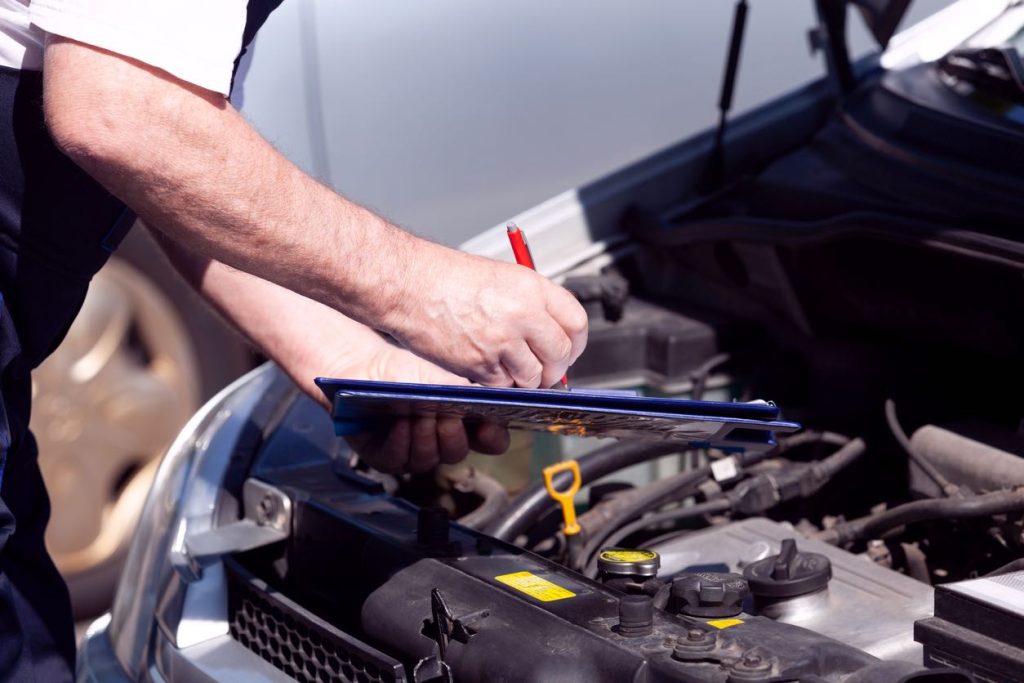
A thorough inspection under the hood can reveal potential issues with the car’s mechanical systems. The engine is the heart of the car, so ensuring it’s in good condition is critical.
Steps for Inspecting the Engine:
- Look for Leaks: Check for any fluid leaks under the car and around the engine. Oil, coolant, and other fluids should not be leaking.
- Check Fluid Levels and Condition: Inspect the levels and condition of the oil, coolant, brake fluid, and power steering fluid. Clean, properly filled fluids indicate good maintenance.
- Inspect Belts and Hoses: Look for cracks, fraying, or wear on the belts and hoses. These parts are crucial for the engine’s operation and should be in good condition.
- Listen for Unusual Noises: Start the engine and listen for any unusual sounds such as knocking, ticking, or squealing. These noises can indicate mechanical problems.
Red Flags:
- Fluid Leaks: Any sign of fluid leaks can indicate poor maintenance or serious mechanical issues.
- Dirty or Low Fluids: Dirty or low fluids can suggest the car hasn’t been maintained properly.
- Worn Belts and Hoses: Belts and hoses that are in poor condition can break and cause significant engine damage.
Example: If the engine oil appears dirty or sludgy, it might indicate the car hasn’t had regular oil changes, which can lead to engine damage.
Checking the Battery
The battery is essential for starting the car and powering electrical systems. Ensuring it’s in good condition can save you from unexpected breakdowns.
How to Check the Battery:
- Inspect Terminals: Ensure the battery terminals are clean and free of corrosion.
- Check Age: Most car batteries last between three to five years. Check the battery’s manufacturing date to see how old it is.
- Test Voltage: Use a multimeter to check the battery’s voltage. A fully charged battery should read around 12.6 volts or more when the engine is off.
Red Flags:
- Corroded Terminals: Corrosion can cause poor connections and electrical issues.
- Old Battery: A battery older than five years is more likely to fail and should be replaced soon.
- Low Voltage: A low voltage reading can indicate a weak or failing battery.
Example: If the battery terminals are heavily corroded, it can lead to starting issues and poor electrical system performance.
Examining the Radiator and Cooling System
A well-functioning cooling system is crucial to prevent the engine from overheating. Inspecting the radiator and cooling system can help you avoid costly repairs.
Steps to Examine the Radiator and Cooling System:
- Check for Leaks: Look for any signs of coolant leaks around the radiator and hoses.
- Inspect the Radiator Fins: Ensure the radiator fins are not bent or damaged, which can reduce cooling efficiency.
- Check Coolant Level and Condition: The coolant should be at the proper level and should not be dirty or rusty. Coolant that is low or dirty can indicate neglect or cooling system issues.
Red Flags:
- Coolant Leaks: Any sign of coolant leaks can indicate problems with the radiator, hoses, or water pump.
- Dirty Coolant: Coolant that is discolored or contains debris can suggest the cooling system hasn’t been maintained properly.
- Damaged Radiator Fins: Bent or damaged fins can reduce the radiator’s ability to cool the engine.
Example: If the coolant is rusty or the radiator fins are damaged, it could indicate that the cooling system is compromised, which can lead to engine overheating.
Under the Car
Inspecting the Exhaust System
A properly functioning exhaust system is essential for your car’s performance and environmental compliance. Issues with the exhaust system can lead to increased emissions, noise, and even engine damage.
Steps for Inspecting the Exhaust System:
- Check for Rust and Damage: Look for rust, holes, or any visible damage to the exhaust pipes, muffler, and catalytic converter.
- Listen for Noises: During a test drive, listen for unusual noises such as rattling or loud exhaust sounds, which can indicate leaks or damage.
- Inspect Hangers and Mounts: Ensure that the exhaust system is securely mounted and that the hangers are not broken or missing.
Red Flags:
- Rust or Holes: Significant rust or holes in the exhaust system can lead to leaks and increased emissions.
- Unusual Noises: Rattling or loud exhaust noises can indicate loose or damaged components.
- Loose Hangers: Broken or missing hangers can cause the exhaust system to sag or drag, leading to further damage.
Example: If you hear a loud exhaust noise during the test drive, it might indicate a hole or crack in the exhaust pipe or muffler, which will need to be repaired.
Evaluating the Suspension
The suspension system is critical for a smooth and controlled ride. Inspecting the suspension can help you identify issues that affect handling, comfort, and safety.
How to Evaluate the Suspension:
- Visual Inspection: Look for signs of wear or damage to the shocks, struts, and springs.
- Check for Leaks: Inspect the shock absorbers and struts for any fluid leaks, which can indicate they are worn out.
- Perform the Bounce Test: Push down firmly on each corner of the car and release. The car should bounce back smoothly and settle quickly. Excessive bouncing can indicate worn shocks or struts.
Red Flags:
- Worn or Damaged Components: Any visible damage or excessive wear to the suspension components.
- Fluid Leaks: Leaking shocks or struts need to be replaced.
- Excessive Bouncing: Indicates that the shocks or struts are not functioning properly.
Example: If the car bounces excessively during the bounce test, it suggests that the shocks or struts are worn and need to be replaced, which can be costly.
Inspecting the Brakes
A reliable braking system is essential for your safety. Inspecting the brakes can help you ensure that they are in good working condition and provide reliable stopping power.
Steps for Inspecting the Brakes:
- Check Brake Pads and Rotors: Inspect the thickness of the brake pads and look for any signs of wear on the rotors. Thin pads and grooved rotors indicate that they need to be replaced.
- Test Brake Response: During a test drive, pay attention to the brake response. The brakes should be firm and responsive without any vibrations or noises.
- Look for Leaks: Inspect the brake lines and calipers for any signs of fluid leaks.
Red Flags:
- Worn Brake Pads: Thin brake pads need to be replaced to ensure safe braking performance.
- Grooved Rotors: Rotors with deep grooves or scoring need to be resurfaced or replaced.
- Brake Fluid Leaks: Leaking brake fluid can lead to brake failure and needs immediate attention.
Example: If you notice a squealing noise when braking, it might indicate that the brake pads are worn and need to be replaced.
Test Driving the Car
Planning the Test Drive Route
A thorough test drive involves driving the car in various conditions to get a complete picture of its performance and handling.
Ideal Test Drive Route:
- City Streets: Assess the car’s performance in stop-and-go traffic and its maneuverability.
- Highway: Evaluate the car’s acceleration, stability at high speeds, and overall comfort.
- Rough Roads: Test the suspension and ride quality on uneven or rough surfaces.
What to Look For:
- Smooth Acceleration: The car should accelerate smoothly without hesitation or unusual noises.
- Responsive Braking: The brakes should be firm and responsive without pulling to one side.
- Handling and Steering: The steering should be precise, and the car should handle corners without excessive body roll.
- Comfort: Assess the comfort of the seats and the effectiveness of the climate control system.
Example: If the car pulls to one side during braking, it might indicate alignment issues or problems with the brake system.
Evaluating Performance
During the test drive, pay attention to the car’s overall performance, including the engine, transmission, and handling.
Key Performance Indicators:
- Engine Noise: Listen for any unusual noises such as knocking, ticking, or excessive noise, which can indicate engine problems.
- Transmission Shifts: The transmission should shift smoothly without hesitation or clunking noises.
- Ride Quality: The car should provide a comfortable ride without excessive vibrations or harshness.
Red Flags:
- Unusual Engine Noises: Can indicate internal engine problems.
- Rough Transmission Shifts: Might suggest transmission issues that can be costly to repair.
- Harsh Ride: Can indicate suspension problems or issues with the tires.
Example: If the transmission hesitates or makes a clunking noise during shifts, it could indicate a problem that needs further investigation.
Testing Comfort and Convenience Features
Ensure that all comfort and convenience features work properly, as these can significantly impact your driving experience.
Features to Test:
- Climate Control: Check the heating, air conditioning, and defrost functions.
- Infotainment System: Test the radio, CD player, Bluetooth connectivity, and navigation system.
- Power Accessories: Ensure that all power windows, locks, and mirrors work correctly.
- Seat Adjustments: Test all seat adjustments, including lumbar support and heating/cooling features.
Red Flags:
- Non-Functional Features: Any feature that doesn’t work as expected can indicate electrical issues.
- Persistent Odors: Unpleasant odors can be difficult to remove and might indicate underlying issues such as mold or mildew.
Example: If the air conditioning doesn’t blow cold air, it could indicate a problem with the AC system, which can be expensive to fix.
Reviewing the Car’s History
Obtaining a Vehicle History Report
A vehicle history report provides valuable information about the car’s past, helping you make a more informed decision.
How to Obtain a Vehicle History Report:
- Carfax: Offers detailed reports including accident history, service records, and previous ownership.
- AutoCheck: Provides similar information and a vehicle score to assess the car’s condition.
- VINCheck: Free service from the National Insurance Crime Bureau to check if the car has been reported as stolen or salvaged.
Key Elements to Look For:
- Accident History: Check for any reported accidents and the severity of the damage.
- Service Records: Look for regular maintenance and any major repairs.
- Title Status: Ensure the car has a clean title with no liens or salvage history.
Red Flags:
- Major Accidents: Cars with severe accident histories might have underlying issues.
- Inconsistent Records: Gaps in service records or inconsistent mileage can indicate potential problems.
- Salvage Title: A salvage title means the car has been declared a total loss by an insurance company, which can significantly affect its value and safety.
Example: If the vehicle history report shows a major accident with structural damage, it might be best to avoid that car, as such damage can lead to ongoing issues.
Verifying Ownership and Title
Ensuring that the car’s ownership and title are clear and legitimate is crucial to avoiding legal and financial issues.
Steps to Verify Ownership and Title:
- Match the VIN: Ensure the VIN on the car matches the VIN on the title and registration.
- Check for Liens: Ensure there are no outstanding liens on the car. Liens indicate that the current owner still owes money on the car.
- Confirm Seller’s Information: Verify that the seller’s information matches the name on the title.
Red Flags:
- Mismatched VIN: A mismatched VIN can indicate tampering or theft.
- Outstanding Liens: Unpaid liens can become your responsibility if you purchase the car.
- Unverified Seller: If the seller’s information doesn’t match the title, it could indicate a scam or stolen vehicle.
Example: If the VIN on the car doesn’t match the VIN on the title, it’s a significant red flag that should be investigated further.
Professional Inspection
Benefits of a Professional Inspection
Even if you’ve conducted a thorough inspection, having a professional mechanic examine the car can provide additional peace of mind and uncover hidden issues.
Why a Professional Inspection is Important:
- Expertise: Mechanics have the experience and tools to identify issues that you might miss.
- Detailed Report: A professional inspection includes a comprehensive report on the car’s condition.
- Negotiation Leverage: Use the inspection report to negotiate a better price or request repairs before purchase.
Common Issues Identified by Mechanics:
- Engine Problems: Mechanics can identify engine issues that might not be apparent during a visual inspection.
- Transmission Issues: A mechanic can test the transmission more thoroughly and identify potential problems.
- Hidden Damage: Professionals can spot signs of hidden damage from accidents or poor repairs.
Example: A mechanic might find that the car has a small oil leak, which can be used to negotiate a lower price or have the seller fix the issue before purchase.
Finding a Trustworthy Mechanic
Choosing the right mechanic to inspect the car is crucial to getting an accurate assessment of its condition.
Tips for Choosing a Reputable Mechanic:
- Check Reviews: Look for mechanics with positive reviews and high ratings.
- Ask for Recommendations: Get recommendations from friends, family, or online forums.
- Ensure Independence: Choose a mechanic who is not affiliated with the seller to ensure an unbiased inspection.
Example: If a trusted mechanic finds that the car needs several minor repairs, you can use this information to negotiate a better deal or ask the seller to make the repairs before finalizing the purchase.
Conclusion
Buying a used car can be a complex process, but a thorough inspection can help you make a smart and informed decision. From checking the exterior and interior to test driving and reviewing the car’s history, each step is crucial to ensuring you get a reliable vehicle. Don’t rush the process; take your time to inspect the car thoroughly and, if needed, get a professional mechanic’s opinion. By following this ultimate guide to inspecting a used car before you buy it, you’ll be well-equipped to avoid common pitfalls and drive away with confidence.
Recap of the Ultimate Guide to Inspecting a Used Car Before You Buy It
- Preparing for the Inspection: Research the car model and gather essential tools.
- Exterior Inspection: Check the bodywork, tires, lights, and glass.
- Interior Inspection: Assess the seats, upholstery, electronics, and gauges.
- Under the Hood: Inspect the engine, battery, and cooling system.
- Under the Car: Evaluate the exhaust system, suspension, and brakes.
- Test Driving the Car: Plan a comprehensive test drive route and evaluate performance.
- Reviewing the Car’s History: Obtain a vehicle history report and verify ownership and title.
- Professional Inspection: Consider a professional mechanic’s inspection for additional peace of mind.
By following these guidelines, you’ll be better equipped to find a used car that meets your needs and budget, ensuring a successful and satisfying purchase experience.
Additional Sections
Frequently Asked Questions (FAQs)
What should I bring to a car inspection?
- Bring essential tools like a flashlight, tire pressure gauge, OBD-II scanner, and a checklist.
How long does a thorough inspection take?
- A comprehensive inspection can take a couple of hours, especially if you include a test drive and a professional mechanic’s evaluation.
Can I trust the seller’s inspection report?
- While a seller’s inspection report can provide useful information, it’s always best to conduct your own inspection or hire a professional mechanic for an unbiased assessment.
Resources and References
Introduction
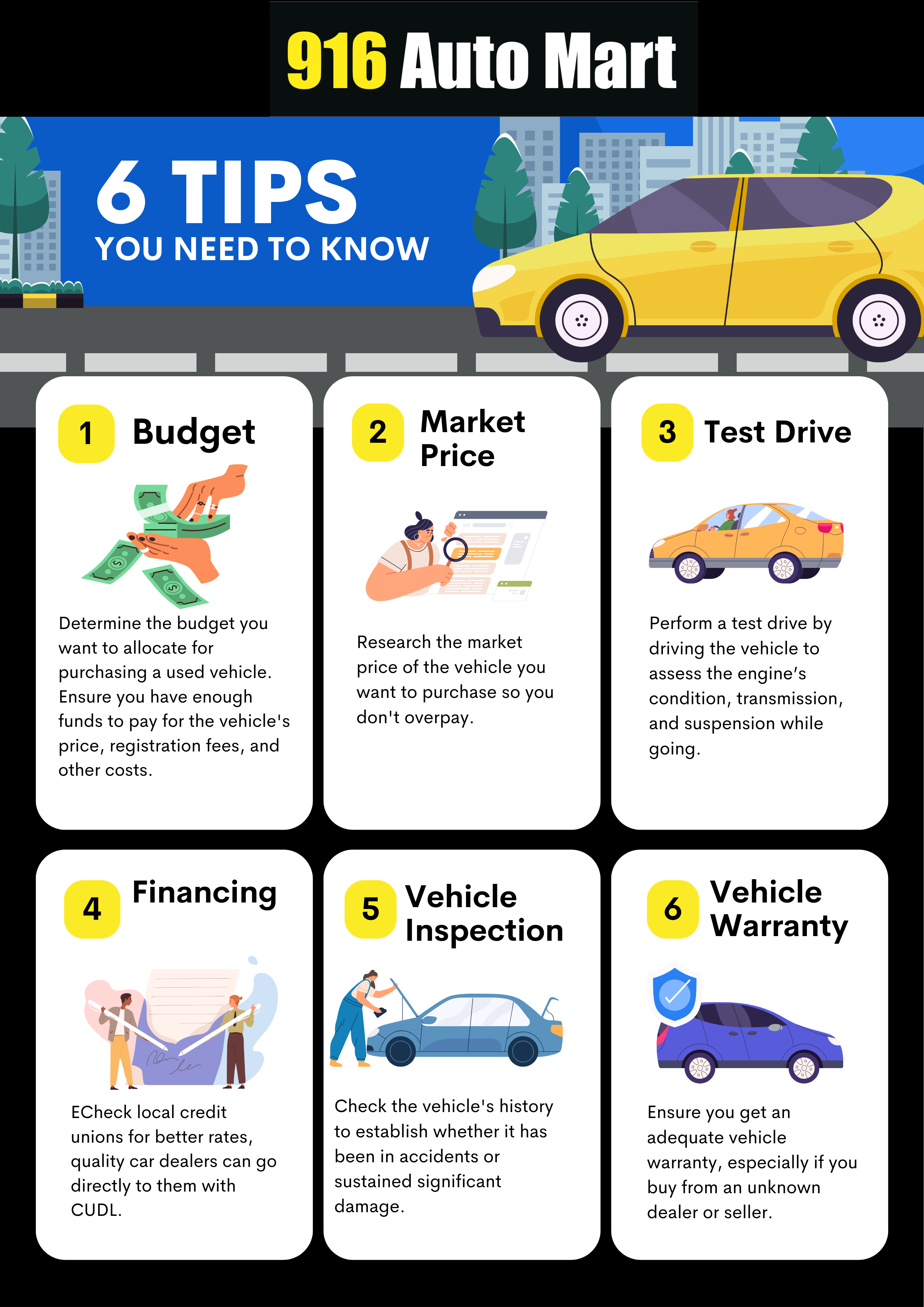
At 916 Auto Mart, we know that buying a used car for the first time can be an exciting yet daunting experience. With the myriad of options available and the potential pitfalls, being well-informed is crucial to making a smart purchase. This guide aims to simplify the process by providing the Top 6 Tips for First-Time Used Car Buyers in Sacramento. By following these tips, you can save money, avoid common mistakes, and drive away with confidence in your new vehicle.
Tip 1: Determine Your Budget
Understanding Your Financial Situation
Before you start browsing the lot or online listings, it’s essential to have a clear understanding of your financial situation. Assess your current income, expenses, and any existing debt. This will help you determine how much you can realistically afford to spend on a car without stretching your finances too thin.
Setting a Realistic Budget
Setting a budget is one of the most critical steps in the car-buying process. It’s easy to get carried away by shiny exteriors and powerful engines, but sticking to a budget will help you avoid financial stress later on.
Tools and Resources for Budgeting:
- Budgeting Apps: Apps like Mint, YNAB (You Need A Budget), and PocketGuard can help you track your income and expenses.
- Financial Planners: Consulting with a financial planner can provide a detailed and personalized budget plan.
Considerations for Setting a Budget:
- Monthly Loan Payments: Ideally, your monthly car payment should not exceed 20% of your monthly take-home pay.
- Insurance Costs: Research insurance premiums for the models you’re considering.
- Maintenance and Repairs: Factor in potential maintenance costs and repairs, which can vary significantly by make and model.
- Taxes and Registration: Don’t forget to include state taxes and registration fees in your budget.
Considering Additional Costs
Beyond the purchase price, owning a car involves several ongoing costs. These additional expenses can add up, so it’s crucial to consider them when setting your budget.
Additional Costs to Consider:
- Insurance: Get quotes from multiple providers to understand the insurance cost for different models.
- Maintenance: Regular maintenance (oil changes, tire rotations) and unexpected repairs.
- Fuel: Calculate the average fuel cost based on the car’s fuel efficiency and your driving habits.
- Registration and Taxes: State registration fees and taxes can vary, so check the rates in Sacramento.
Example: If your monthly income is $4,000 and your expenses (including rent, utilities, groceries, etc.) are $3,000, you have $1,000 left. Aim to keep your car payment, insurance, and other car-related expenses within $600 to $700 to maintain a comfortable financial buffer.
Tip 2: Research the Market
Identifying Reliable Car Models
One of the keys to a successful used car purchase is choosing a reliable model. Start by researching which makes and models are known for their longevity and low maintenance costs. Reliable cars can save you money and headaches in the long run.
Resources for Car Reviews and Reliability Ratings:
- Consumer Reports: Offers comprehensive reviews and reliability ratings for various car models.
- Edmunds: Provides detailed car reviews, including pros and cons of each model.
- Kelley Blue Book: Offers insights into the reliability and value of used cars.
Top Reliable Used Car Models:
- Honda Civic: Known for its reliability, fuel efficiency, and low maintenance costs.
- Toyota Corolla: Offers excellent reliability and longevity.
- Subaru Outback: Great for those needing more space and off-road capability without sacrificing reliability.
Understanding Market Prices
Knowing the fair market value of the car you want to buy is crucial to avoid overpaying. Use online tools to check the average prices for the specific make, model, and year in Sacramento.
Tools for Checking Market Prices:
- Kelley Blue Book: Provides a comprehensive guide to car values based on condition, mileage, and location.
- Edmunds True Market Value (TMV): Offers a detailed estimate of what others are paying for the same car in your area.
- NADA Guides: Another reliable resource for determining car values.
Example: According to Kelley Blue Book, a 2017 Honda Civic with 30,000 miles in good condition typically ranges from $15,000 to $18,000 in Sacramento.
Checking Vehicle History Reports
Before finalizing any purchase, it’s essential to check the vehicle’s history report. This report provides valuable information about the car’s past, including any accidents, title issues, or previous ownership details. Quality dealerships, like 916 Auto Mart, will provide these free of charge.
How to Obtain and Interpret Vehicle History Reports:
- Carfax: Offers detailed reports including accident history, service records, and previous ownership.
- AutoCheck: Provides similar information and a vehicle score to assess the car’s condition.
- VINCheck: Free service from the National Insurance Crime Bureau to check if the car has been reported as stolen or salvaged.
Key Factors to Look for in a Vehicle History Report:
- Accident History: Avoid cars with a history of major accidents.
- Service Records: Regular maintenance records indicate a well-maintained vehicle.
- Title Status: Ensure the car has a clean title with no liens or salvage history.
Tip 3: Test Drive the Vehicle
Importance of Test Driving
Test driving is a crucial step in the car-buying process. It allows you to assess the car’s performance, comfort, and overall condition. A thorough test drive can reveal potential issues that might not be evident from a visual inspection alone.
How to Conduct a Thorough Test Drive
To make the most out of your test drive, plan a route that includes various driving conditions such as city streets, highways, and rough roads. This will give you a comprehensive understanding of how the car performs in different environments.
Checklist for a Thorough Test Drive:
- Engine Performance: Check for smooth acceleration and any unusual noises.
- Braking: Test the brakes for responsiveness and listen for any grinding or squeaking sounds.
- Handling and Suspension: Assess how the car handles corners and rough roads, and check for any rattling or bouncing.
- Comfort: Evaluate the comfort of the seats, the ease of adjusting them, and the functionality of the climate control system.
- Visibility: Ensure you have good visibility from all angles and that there are no significant blind spots.
- Interior Features: Test all the electronics, including the infotainment system, lights, wipers, and other controls.
Questions to Ask Dealers
While test driving is important, asking the right questions at the dealership is equally crucial. Don’t hesitate to inquire about the car’s history, condition, and any warranties or guarantees offered.
Important Questions to Ask:
- Vehicle History: “Can you provide a detailed vehicle history report?”
- Condition: “Has the car undergone a recent inspection? Are there any known issues?”
- Warranty: “Is there a warranty included with the purchase? What does it cover?”
- Previous Ownership: “How many previous owners has the car had?”
- Accidents: “Has the car been involved in any accidents?”
- Repairs: “Have any major repairs been done on the car?”
Pro Tip: Take notes during your visit and ask for documentation to verify the answers provided by the dealer.
Tip 4: Understand Financing Options
Exploring Different Financing Sources
Understanding your financing options is crucial to getting the best deal on your used car purchase. Various sources offer car loans, including banks, credit unions, dealerships, and online lenders. Each has its own advantages and drawbacks.
Financing Sources:
- Banks: Typically offer higher interest rates, and may have stricter approval criteria.
- Credit Unions: Often provide lower interest rates and personalized service, but you need to be a member.
- Dealership Financing: Convenient and can compare approvals from banks, independent lenders and credit unions. Always compare offers.
- Online Lenders: Quick approval process and the ability to compare multiple offers at once, may have issues with subprime approvals.
Pros and Cons of Each Source:
- Banks: Higher rates unless you have perfect credit, will require higher credit scores.
- Credit Unions: Lower rates and better terms for members, but membership is required.
- Dealerships: Convenient and flexible, typically the lowest rates but not as much control as having a pre approval.
- Online Lenders: Fast and easy application process, but can sometimes have hidden fees and no options for sub-prime.
Getting Pre-Approved for a Loan
Getting pre-approved for a car loan can give you a significant advantage when shopping for a used car. It shows dealers that you are a serious buyer and gives you a clear idea of your budget.
Benefits of Pre-Approval:
- Better Negotiation Power: Dealers are more likely to take you seriously.
- Clear Budget: Knowing your loan amount helps you stick to your budget.
- Saves Time: Streamlines the buying process by reducing time spent on financing paperwork at the dealership.
Steps to Obtain Pre-Approval:
- Check Your Credit Score: Ensure your credit report is accurate.
- Research Lenders: Compare rates and terms from various lenders.
- Gather Documents: Prepare documents such as proof of income, ID, and address verification.
- Apply: Submit your application online or in-person with your chosen lender.
- Review Offers: Compare the pre-approval offers and choose the best one.
Example: According to Experian, pre-approved buyers often secure loans with interest rates 0.5% to 1% lower than those who finance through the dealership directly.
Reading the Fine Print
Understanding the terms and conditions of your loan is critical to avoid any unpleasant surprises down the line. Make sure you read and understand all aspects of the loan agreement before signing.
Key Loan Terms to Understand:
- Interest Rate: The cost of borrowing money, expressed as a percentage.
- Loan Term: The length of time you have to repay the loan, typically 36 to 72 months.
- Monthly Payments: The amount you are required to pay each month.
- Fees and Penalties: Be aware of any late payment fees, prepayment penalties, or other charges.
- Total Cost: The total amount you will pay over the life of the loan, including interest and fees.
Common Terms to Watch Out For:
- Balloon Payments: Large final payments at the end of the loan term.
- Variable Interest Rates: Interest rates that can change over time, affecting your monthly payments.
- Early Payment Penalties: Fees for paying off your loan early.
Pro Tip: If you’re unsure about any terms, ask the lender to clarify or seek advice from a financial advisor.
Tip 5: Inspect the Car Thoroughly
Conducting a Visual Inspection
Before finalizing your purchase, conduct a thorough visual inspection of the car. This can help you identify any potential issues that might not be evident from a test drive alone.
Checklist for Visual Inspection:
- Exterior: Look for rust, dents, scratches, and mismatched paint.
- Tires: Check for even wear and sufficient tread depth.
- Lights: Ensure all lights (headlights, brake lights, indicators) are functioning.
- Interior: Inspect the seats, dashboard, and all controls for signs of wear and tear.
- Under the Hood: Check for leaks, corrosion, and the condition of belts and hoses.
Red Flags to Watch Out For:
- Rust: Especially around the wheel wells and undercarriage.
- Mismatched Paint: Could indicate past accidents and repairs.
- Uneven Tire Wear: May suggest alignment issues or suspension problems.
Example: When inspecting a used car, Jane noticed slight rust around the wheel wells. After discussing it with the dealer, they agreed to address the rust issue before completing the sale.
Getting a Professional Inspection
Even if the car looks good during your visual inspection, it’s always a good idea to have it checked by a professional mechanic. A mechanic can identify issues that might not be visible to the untrained eye.
Benefits of a Professional Inspection:
- Uncover Hidden Issues: Mechanics can spot problems that you might miss.
- Peace of Mind: Knowing the car is in good condition can give you confidence in your purchase.
- Negotiation Leverage: Use the inspection report to negotiate a better price or request repairs.
What to Expect from a Professional Inspection:
- Comprehensive Check: Includes engine, transmission, brakes, suspension, and more.
- Detailed Report: A written report outlining the car’s condition and any recommended repairs.
- Test Drive: Mechanic may perform a test drive to assess the car’s performance.
Pro Tip: Choose a mechanic who is not affiliated with the dealership to ensure an unbiased inspection.
Negotiating Based on Inspection Results
Use the results of your visual and professional inspections to negotiate a better deal. If any issues are identified, you can ask the dealer to fix them or reduce the price accordingly.
How to Negotiate Effectively:
- Be Informed: Use the inspection report as leverage.
- Stay Calm: Approach negotiations calmly and professionally.
- Know Your Limits: Be prepared to walk away if the dealer is unwilling to negotiate fairly.
Example: After a mechanic found that the car needed new brake pads, Tim negotiated with the dealer to either replace the brake pads or reduce the price by $300.
Tip 6: Consider Warranties
Importance of Warranties
Warranties can provide peace of mind and protect you from unexpected repair costs. Understanding the different types of warranties available can help you make an informed decision.
Types of Warranties
There are two main types of warranties to consider when buying a used car: factory warranties and extended warranties.
Factory Warranties:
- What They Cover: Typically cover major components like the engine and transmission.
- Duration: Varies by manufacturer, but usually lasts for a specific number of years or miles.
- Transferability: Some factory warranties are transferable to new owners, adding value to a used car.
Extended Warranties:
- What They Cover: Can cover a wide range of components, including electronics and drivetrain.
- Cost: Usually purchased separately and can be more expensive.
- Providers: Offered by manufacturers, dealerships, or third-party companies.
Evaluating Warranty Options
When considering a warranty, it’s essential to evaluate the coverage details, costs, and terms.
Factors to Consider:
- Coverage: Understand exactly what is covered and what is not.
- Duration: Check the length of the warranty and any mileage limits.
- Cost: Compare the cost of the warranty with potential repair costs.
- Provider Reputation: Research the reputation of the warranty provider to ensure reliable service.
Example: Purchasing an extended warranty from a reputable third-party provider can offer comprehensive coverage for your used car, providing peace of mind for several years.
Negotiating Warranty Terms
You can often negotiate the terms of an extended warranty, especially if you’re purchasing it from the dealership.
Tips for Negotiating Warranties:
- Compare Offers: Get quotes from multiple providers to use as leverage.
- Understand the Terms: Make sure you fully understand the terms and coverage of the warranty.
- Ask for Discounts: Dealerships may offer discounts or incentives for purchasing a warranty.
- Bundle Deals: Sometimes, you can get a better deal if you bundle the warranty with other services or products.
Pro Tip: Always read the fine print and ensure you understand the terms and conditions of the warranty before signing.
Conclusion
Buying a used car for the first time can be a complex process, but by following these top five tips, you can navigate it with confidence. From determining your budget to inspecting the car thoroughly, each step is designed to help you make an informed and smart purchase. Sacramento has a vibrant market for used cars, and being well-prepared will ensure you find the right vehicle at the right price.
Recap of Top 5 Tips for First-Time Used Car Buyers in Sacramento
- Determine Your Budget: Understand your financial situation, set a realistic budget, and consider all additional costs.
- Research the Market: Identify reliable car models, understand market prices, and check vehicle history reports.
- Test Drive the Vehicle: Conduct thorough test drives and ask the right questions at the dealership.
- Understand Financing Options: Explore different financing sources, get pre-approved for a loan, and read the fine print.
- Inspect the Car Thoroughly: Conduct visual inspections, get a professional mechanic’s opinion, and use inspection results for negotiation.
- Consider Warranties: Understand the importance of warranties, evaluate options, and negotiate terms for added peace of mind.
By following these guidelines, you’ll be better equipped to find a used car that meets your needs and budget, ensuring a successful and satisfying purchase experience.
Additional Sections
Frequently Asked Questions (FAQs)
What is the best way to determine my budget for a used car?
- Calculate your monthly income and expenses to see how much you can comfortably afford. Consider using budgeting apps or consulting a financial planner.
How do I know if I’m getting a good deal on a used car?
- Research market prices using tools like Kelley Blue Book and Edmunds. Compare prices at different dealerships and always check the vehicle history report.
What should I look for during a test drive?
- Assess the car’s handling, braking, visibility, and interior comfort. Pay attention to any unusual noises or vibrations.
Can I get a car loan with bad credit?
- Yes, explore options like dealership financing, credit unions, and online lenders. Getting pre-approved and having a larger down payment can improve your chances.
Why is it important to get a professional inspection?
- A professional mechanic can identify hidden issues that might not be apparent during a visual inspection, providing you with valuable information to negotiate a better deal.
Resources and References
Introduction
Getting approved for a used car loan with bad credit can be challenging, but it’s not impossible. Understanding the process and knowing your options can make a significant difference. This comprehensive guide will help you navigate the steps to secure a car loan, even if you have bad credit, specifically in the Sacramento area. We’ll cover everything from understanding your credit score to exploring financing options, preparing for the application, and improving your chances of approval. By the end of this guide, you’ll be well-equipped to take on the car buying process with confidence.
Understanding Your Credit Score
What is a Credit Score?
A credit score is a numerical representation of your creditworthiness, based on your credit history. It ranges from 300 to 850, with higher scores indicating better credit health. Credit scores are calculated using several factors, including payment history, credit utilization, length of credit history, new credit, and credit mix.
Key Factors Influencing Credit Score:
- Payment History (35%): Timely payments boost your score, while late or missed payments lower it.
- Credit Utilization (30%): The ratio of your current credit balances to your credit limits. Lower utilization rates are better.
- Length of Credit History (15%): The longer your credit history, the better your score.
- New Credit (10%): Frequent applications for new credit can negatively impact your score.
- Credit Mix (10%): A diverse mix of credit accounts (e.g., credit cards, mortgages, auto loans) can improve your score.
How Bad Credit Affects Car Loans
Bad credit can significantly impact your ability to secure a car loan, as lenders view you as a higher risk. This often results in higher interest rates, larger down payment requirements, and less favorable loan terms.
Impact of Bad Credit on Loan Terms:
- Higher Interest Rates: Lenders charge higher interest rates to offset the risk of lending to borrowers with bad credit.
- Larger Down Payments: To mitigate risk, lenders may require a more substantial down payment.
- Shorter Loan Terms: Lenders might offer shorter loan terms to ensure quicker repayment.
Example: According to Experian, the average interest rate for a new car loan for borrowers with a credit score below 600 is around 14.3%, compared to 4.21% for those with scores above 750.
Checking Your Credit Report
Before applying for a car loan, it’s essential to check your credit report for accuracy. Errors on your credit report can lower your score and impact your loan approval chances.
Steps to Check Your Credit Report:
- Obtain Your Report: You can get a free credit report annually from each of the three major credit bureaus (Equifax, Experian, and TransUnion) at AnnualCreditReport.com.
- Review for Errors: Look for incorrect information, such as wrong account balances or erroneous late payments.
- Dispute Inaccuracies: If you find errors, dispute them with the credit bureau. Provide documentation to support your claim.
Tip: Regularly monitoring your credit report can help you stay on top of your credit health and address issues promptly.
Preparing for the Loan Application
Setting a Realistic Budget
Setting a realistic budget is crucial when preparing to apply for a used car loan, especially with bad credit. Understanding what you can afford will help you avoid financial strain and increase your chances of loan approval.
Factors to Consider When Setting a Budget:
- Monthly Income: Calculate your net monthly income to determine how much you can allocate to a car payment.
- Current Expenses: List all your monthly expenses, including rent/mortgage, utilities, groceries, and other loan payments.
- Additional Costs: Consider costs such as insurance, maintenance, fuel, and registration.
Example: If your monthly income is $3,500 and your expenses are $2,500, you have $1,000 left. Aim to keep your car payment below 15% of your monthly income, which would be $525 in this case.
Saving for a Down Payment
A larger down payment can significantly improve your chances of getting approved for a car loan with bad credit. It reduces the loan amount, which can make lenders more willing to approve your loan.
Tips for Saving for a Down Payment:
- Set a Savings Goal: Determine how much you need to save and set a realistic goal.
- Cut Unnecessary Expenses: Identify areas where you can cut back, such as dining out or subscription services.
- Automate Savings: Set up automatic transfers to a savings account dedicated to your down payment.
Fact: A down payment of 20% or more of the car’s purchase price can significantly increase your chances of loan approval and lower your monthly payments.
Gathering Necessary Documentation
Having all necessary documentation ready can streamline the loan application process and improve your chances of approval. Lenders require specific documents to verify your identity, income, and financial stability.
Commonly Required Documents:
- Proof of Income: Recent pay stubs, tax returns, or bank statements.
- Proof of Residence: Utility bills, lease agreements, or mortgage statements.
- Identification: Driver’s license or state ID.
- Credit Report: A copy of your credit report (optional, but helpful).
Why These Documents Are Important:
- Proof of Income: Demonstrates your ability to repay the loan.
- Proof of Residence: Confirms your stable living situation.
- Identification: Verifies your identity to prevent fraud.
- Credit Report: Helps the lender assess your creditworthiness.
Exploring Financing Options
Dealership Financing
One of the most common ways to finance a used car with bad credit is through dealership financing. Many dealerships in Sacramento have in-house financing departments that specialize in helping customers with poor credit.
Pros of Dealership Financing:
- Convenience: The dealership handles the financing process, making it easier for you.
- Special Programs: Some dealerships offer special financing programs for bad credit borrowers.
- Flexible Terms: Dealerships might offer flexible terms and payment plans to accommodate your financial situation.
Cons of Dealership Financing:
- Higher Interest Rates: Dealership financing often comes with higher interest rates compared to other options.
- Potential for Upselling: Dealers may try to upsell you on additional services or warranties, increasing the overall cost.
Example: A Sacramento dealership might offer a financing plan specifically designed for customers with credit scores below 600, which could include higher interest rates but more flexible down payment requirements.
Credit Unions and Banks
Credit unions and banks can be excellent sources of financing for those with bad credit. They often offer lower interest rates compared to dealerships and might be more willing to work with you based on your history with the institution.
Benefits of Credit Unions and Banks:
- Lower Interest Rates: Typically offer lower interest rates than dealership financing.
- Personalized Service: More personalized service and potentially more lenient terms for existing customers.
- Building a Relationship: Establishing or maintaining a relationship with your bank or credit union can be beneficial for future financial needs.
Tips for Approaching Credit Unions and Banks:
- Prepare Your Documents: Have all necessary documentation ready to show your income and financial stability.
- Explain Your Situation: Be honest about your credit history and explain any mitigating circumstances.
- Consider Local Credit Unions: Local credit unions might be more understanding and willing to help community members.
Fact: According to the Credit Union National Association, credit unions typically offer car loan rates that are about 1.5% lower than those of traditional banks.
Online Lenders
Online lenders are another viable option for securing a used car loan with bad credit. Many online lenders specialize in bad credit auto loans and can provide quick approvals and competitive rates.
Advantages of Online Lenders:
- Convenience: Apply from the comfort of your home and receive quick approvals.
- Specialized Services: Many online lenders specialize in bad credit loans, making them more likely to approve your application.
- Comparison Shopping: Easily compare rates and terms from multiple lenders to find the best deal.
Evaluating Online Lenders:
- Check Reviews: Look for reviews and ratings from other customers to ensure the lender is reputable.
- Verify Legitimacy: Ensure the lender is legitimate and not a scam by checking for accreditation or Better Business Bureau (BBB) ratings.
- Understand Terms: Carefully read the terms and conditions to understand the interest rates, fees, and repayment schedule.
Example: Websites like LendingTree and Auto Credit Express connect borrowers with lenders specializing in bad credit auto loans, offering a convenient way to compare multiple offers.
Improving Your Chances of Approval
Increasing Your Down Payment
A larger down payment can significantly increase your chances of getting approved for a car loan with bad credit. It reduces the lender’s risk and shows your commitment to the purchase.
Benefits of a Larger Down Payment:
- Lower Loan Amount: Reduces the amount you need to borrow, making approval more likely.
- Better Loan Terms: May result in lower interest rates and more favorable terms.
- Instant Equity: Gives you immediate equity in the car, reducing the risk of owing more than the car is worth.
Strategies for Saving a Larger Down Payment:
- Cut Unnecessary Expenses: Reduce spending on non-essential items to save more each month.
- Increase Income: Look for side jobs or freelance work to boost your income.
- Set Up Automatic Savings: Automatically transfer a portion of your paycheck to a savings account dedicated to your down payment.
Example: Saving an additional $2,000 for a down payment could significantly lower your monthly payments and increase your chances of loan approval.
Finding a Cosigner
Having a cosigner with good credit can greatly improve your chances of getting approved for a car loan. A cosigner agrees to take on the responsibility of the loan if you default, reducing the lender’s risk.
Benefits of Having a Cosigner:
- Improved Approval Chances: Lenders are more likely to approve your loan with a cosigner.
- Better Loan Terms: May result in lower interest rates and more favorable terms.
- Building Credit: Successfully repaying the loan can help rebuild your credit score.
How to Approach a Potential Cosigner:
- Be Honest: Explain your financial situation and why you need a cosigner.
- Discuss Responsibilities: Ensure the cosigner understands their obligations and the risks involved.
- Show Commitment: Demonstrate your commitment to making timely payments to reassure the cosigner.
Tip: Choose a cosigner with a strong credit history and stable income to maximize the benefits.
Choosing the Right Vehicle
Selecting the right vehicle is crucial when applying for a loan with bad credit. Opting for a car within your budget and choosing a reliable model can increase your chances of loan approval and reduce long-term costs.
Factors to Consider When Choosing a Vehicle:
- Affordability: Select a car that fits within your budget, considering not just the purchase price but also insurance, maintenance, and fuel costs.
- Reliability: Choose a reliable model with low maintenance costs to avoid unexpected expenses.
- Resale Value: Consider cars with high resale values, as they are seen as lower risk by lenders.
Example: Opting for a used Honda Civic instead of a luxury vehicle like a BMW can make loan approval easier and reduce your overall financial burden.
The Application Process
Pre-Approval vs. Pre-Qualification
Understanding the difference between pre-approval and pre-qualification can help you navigate the loan application process more effectively. Both steps are important but serve different purposes in securing a car loan.
Pre-Qualification:
- Purpose: Provides an estimate of the loan amount you might qualify for based on a preliminary review of your credit and financial situation.
- Process: Typically involves a soft credit check, which does not affect your credit score.
- Benefit: Gives you an idea of your borrowing power and helps you set a budget.
Pre-Approval:
- Purpose: A more rigorous process where the lender commits to providing you a loan up to a certain amount, pending final approval.
- Process: Involves a hard credit check, which can affect your credit score.
- Benefit: Strengthens your negotiating position with dealers, as it shows you are a serious buyer with secured financing.
Tip: Getting pre-approved can save you time and streamline the car buying process, as you’ll know exactly how much you can afford and have the financing ready.
Submitting Your Application
Once you’ve gathered all necessary documents and chosen a lender, it’s time to submit your loan application. Being thorough and accurate in your application can improve your chances of approval.
Steps to Submitting a Loan Application:
- Complete the Application Form: Fill out the application form provided by the lender, either online or in-person.
- Provide Required Documents: Submit all required documents, such as proof of income, proof of residence, and identification.
- Review for Accuracy: Double-check all information for accuracy to avoid delays or rejections.
- Submit the Application: Send your completed application to the lender.
What to Expect During the Review Process:
- Credit Check: The lender will perform a hard credit check to assess your creditworthiness.
- Verification of Information: The lender will verify your income, employment, and other financial details.
- Loan Decision: You will receive a decision, which could be an approval, denial, or a conditional approval requiring additional information.
Example: A Sacramento resident might apply for a loan at a local credit union, submit all required documents, and receive a decision within a few days.
Negotiating Loan Terms
Once you receive a loan offer, it’s important to review the terms carefully and negotiate if necessary to secure the best deal. Even with bad credit, you can still negotiate aspects of the loan to improve your financial position.
Tips for Negotiating Favorable Loan Terms:
- Interest Rate: If the offered rate is high, ask if there are any ways to reduce it, such as a larger down payment or shorter loan term.
- Loan Term: Negotiate the length of the loan term to balance monthly payments and total interest paid.
- Fees: Inquire about any fees associated with the loan and negotiate to have them reduced or waived if possible.
Common Negotiation Pitfalls to Avoid:
- Accepting the First Offer: Always compare multiple offers to ensure you’re getting the best deal.
- Focusing Only on Monthly Payments: Consider the total cost of the loan, not just the monthly payments.
- Ignoring the Fine Print: Read and understand all terms and conditions before signing the loan agreement.
Quote: “When I negotiated my car loan, I managed to reduce the interest rate by 0.5% by agreeing to a shorter loan term and increasing my down payment,” says Jennifer, a Sacramento car buyer.
What to Do If Your Application is Denied
Understanding the Reasons for Denial
If your loan application is denied, it’s important to understand the reasons behind the decision. Knowing why your application was rejected can help you address the issues and improve your chances of approval in the future.
Common Reasons for Loan Denial:
- Low Credit Score: Your credit score might be too low for the lender’s criteria.
- High Debt-to-Income Ratio: Lenders may see you as overextended if your debt payments are too high relative to your income.
- Insufficient Income: Your income might not meet the lender’s minimum requirements.
- Incomplete Documentation: Missing or incorrect documents can result in denial.
Steps to Take After Denial:
- Request an Explanation: Ask the lender for specific reasons for the denial.
- Review Your Credit Report: Check for errors or negative items that might have impacted your score.
- Address the Issues: Take steps to improve your credit score, reduce your debt, or increase your income.
Tip: Use the denial as an opportunity to strengthen your financial position and reapply once you’ve addressed the issues.
Exploring Alternative Financing Options
If your application is denied, there are still alternative financing options available. While these options might come with higher interest rates or less favorable terms, they can still help you secure a vehicle.
Alternative Financing Options:
- Buy Here, Pay Here Dealerships: These dealerships offer in-house financing, often without a credit check. However, they typically have higher interest rates.
- Personal Loans: If you have a strong relationship with your bank or credit union, you might be able to secure a personal loan for the car purchase.
- Peer-to-Peer Lending: Online platforms like LendingClub connect borrowers with individual lenders who might be more flexible in their lending criteria.
Pros and Cons of Alternative Financing:
- Pros: Easier approval process, no credit checks, and flexible terms.
- Cons: Higher interest rates, stricter repayment terms, and potential for additional fees.
Example: A buy here, pay here dealership in Sacramento might offer a loan with a higher interest rate but without the need for a credit check, making it a viable option for those with bad credit.
Rebuilding Your Credit
Improving your credit score can increase your chances of getting approved for a loan in the future. While rebuilding credit takes time, the benefits are substantial, including lower interest rates and better loan terms.
Steps to Rebuild Your Credit:
- Pay Bills on Time: Consistently making on-time payments is one of the most effective ways to improve your credit score.
- Reduce Debt: Pay down existing debts to lower your debt-to-income ratio.
- Avoid New Credit Applications: Limit new credit inquiries to avoid negative impacts on your score.
- Monitor Your Credit Report: Regularly check your credit report to ensure accuracy and address any errors promptly.
Fact: According to FICO, a history of on-time payments can significantly improve your credit score over time, with each positive payment contributing to a higher score.
Conclusion
Getting approved for a used car loan with bad credit in Sacramento involves understanding your credit score, preparing thoroughly, exploring various financing options, and taking steps to improve your chances of approval. By following the steps outlined in this guide, you can navigate the car buying process with confidence and secure a loan that meets your needs. Remember to be persistent, explore all available options, and make informed decisions throughout the process.
Frequently Asked Questions (FAQs)
What is the minimum credit score needed for a car loan?
- Answer: While there is no universal minimum, a score of 600 or higher generally improves your chances of approval. However, many lenders offer loans to individuals with lower scores, often with higher interest rates.
How can I increase my chances of loan approval with bad credit?
- Answer: Increase your down payment, find a cosigner, choose a more affordable vehicle, and ensure all your documentation is accurate and complete.
Are there specific lenders that specialize in bad credit auto loans?
- Answer: Yes, many online lenders, credit unions, and even some traditional banks offer specialized programs for bad credit borrowers. Dealerships also often have in-house financing options for those with poor credit.